Why ChatGPT Writing Sounds Robotic—and How to Edit It
Find the generic claims, repeated rhythms, filler transitions, and empty conclusions that make AI prose feel robotic, then edit for detail, evidence, and voice.

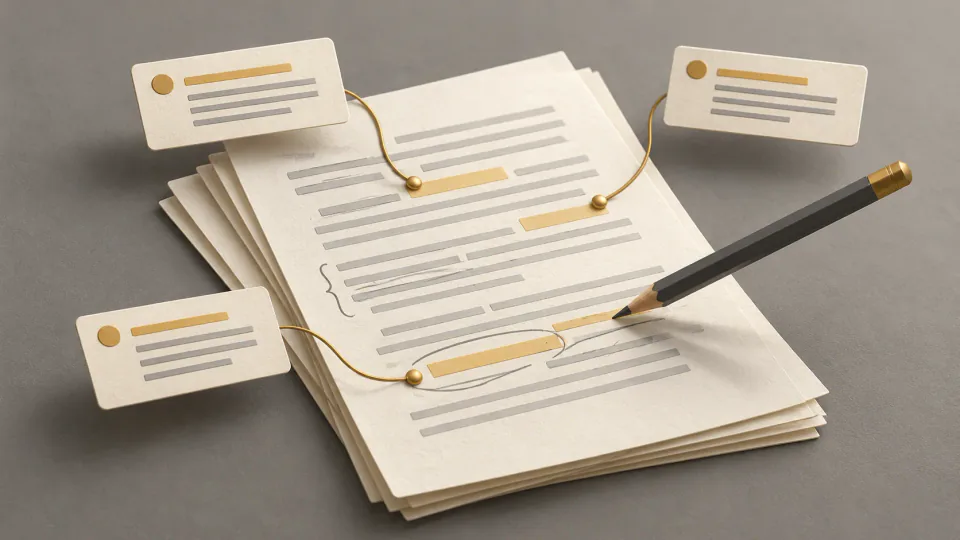
Broad claims, repeated rhythms, generic transitions, and repetitive conclusions can make a smooth AI draft feel robotic. These are editing problems, not authorship evidence.
Ask what readers learn, then check detail, rhythm, evidence, and voice.
Diagnose the pattern
| Pattern | Reader's difficulty | Useful revision |
|---|---|---|
| A claim that fits almost any task | Little concrete information | Name the concept, source, or case. |
| Repeated sentence rhythm | Ideas receive identical emphasis | Combine explanation with shorter key claims. |
| Formal transitions without a relationship | Extra wording obscures the logic | Keep transitions that show contrast, sequence, or consequence. |
| An extended summary conclusion | Repetition replaces insight | End with an implication, limit, or next step. |
Make four focused passes
Specificity: Replace broad nouns with the actual people, actions, course concepts, or sources the paragraph concerns. Add supported detail rather than an invented story.
Rhythm: Vary openings and sentence lengths to suit the ideas. Purdue OWL's sentence-variety guide explains how structure affects emphasis. The repetition guide helps with a more concentrated pass.
Evidence: Connect claims to sources, examples, observations, or assignment details. Check that the evidence supports the wording. Purdue's clarity guide also explains how to connect familiar information with a new point.
Voice: Read the paragraph as a student explaining something they understand. Keep your actual reasoning. The AI humanizer guide explains the editing role. Try alternatives in RewriteMax, then compare them with your original.
An illustrative student edit
A generic draft says:
It is important to note that AI has transformed education in many significant ways and will continue to be important in the future.
A more focused direction is:
AI has changed how students draft and revise. The harder question for this assignment is how schools distinguish useful editing from outsourced thinking.
This teaching example replaces a forecast with a concrete question. An actual paper needs supporting evidence. See how to humanize AI text for a fuller workflow.
Common questions
Why do generated drafts contain generic phrases?
A broad request gives little context for a specific answer. Review general language instead of assuming fluent phrasing fits your purpose.
How can I make the text less robotic?
Add supported examples, vary sentence structure, remove filler, use clear verbs, and connect the paragraph to the real assignment.