

AI Writing
Edit AI Survey Questions So the Answers Mean Something
Review AI survey drafts for single-purpose questions, clear recall periods, usable response choices, and tested skip paths before asking people to answer.
Practical guides for natural writing, thoughtful AI use, and the work of revision.
Make ChatGPT and AI-assisted drafts clearer, more natural, and easier to review.
Understand detector limits, false positives, and safer review workflows for students.
Practical guides on detector signals, policy-aware editing, and responsible use.
Help non-native English writers improve rhythm, tone, and sentence clarity.
Compare humanizers, paraphrasers, grammar tools, and manual editing workflows.
Review AI survey drafts for single-purpose questions, clear recall periods, usable response choices, and tested skip paths before asking people to answer.

Check denominators, percentage points, relative change, baselines, and rounding with worked examples that keep numerical claims accurate through an AI rewrite.

Build a small editorial style sheet for AI-assisted drafts, with preferred terms, examples, and exceptions that preserve facts, labels, quotations, and voice.

Audit the sources behind an AI-assisted draft, identify close paraphrases, repair attribution, and distinguish a useful source review from a similarity or detector score.
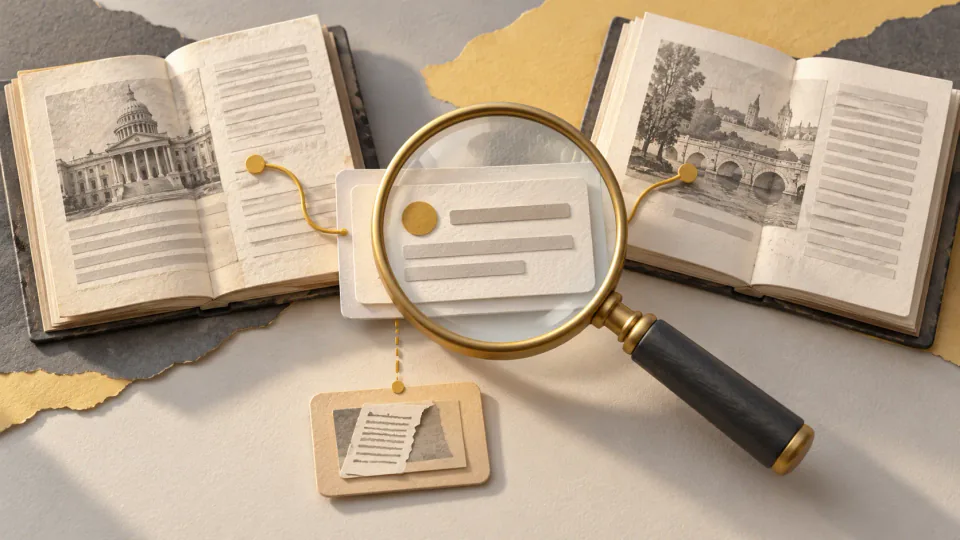
Use a claim-by-claim fact-checking workflow to verify sources, quotations, dates, numerical claims, and citations before relying on an AI-assisted draft.

Plan a realistic cut budget, remove duplicated work, and shorten sentences while protecting the evidence, qualifications, and connections that make your argument valid.
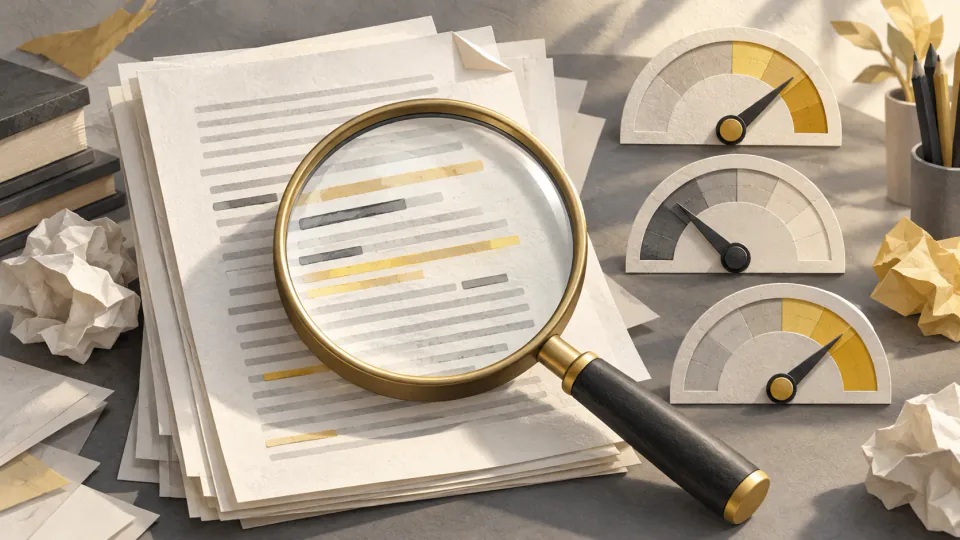
Humanized text can still be flagged. Learn why a detector result is not proof of authorship and how to respond with drafts, sources, policy checks, and process evidence.