
AI Writing
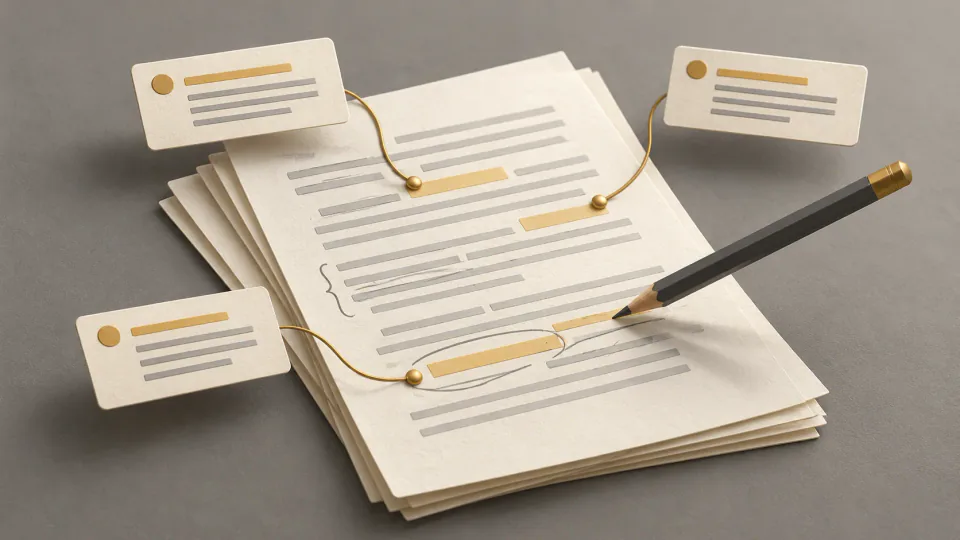
Edit AI Peer Feedback into Specific Comments a Writer Can Use
Check AI-generated peer feedback against the assignment and draft, replace vague judgments with passage-specific observations, and preserve choices for the writer.
Practical guides for natural writing, thoughtful AI use, and the work of revision.
Make ChatGPT and AI-assisted drafts clearer, more natural, and easier to review.
Understand detector limits, false positives, and safer review workflows for students.
Practical guides on detector signals, policy-aware editing, and responsible use.
Help non-native English writers improve rhythm, tone, and sentence clarity.
Compare humanizers, paraphrasers, grammar tools, and manual editing workflows.
Check AI-generated peer feedback against the assignment and draft, replace vague judgments with passage-specific observations, and preserve choices for the writer.

Use readability scores to locate difficult passages, then edit for the reader's task and check that actors, conditions, technical terms, and evidence remain accurate.

Review AI-assisted drafts for unequal assumptions, unsupported group claims, missing agency, and absent perspectives with a practical passage-by-passage audit.

Use a claim-by-claim fact-checking workflow to verify sources, quotations, dates, numerical claims, and citations before relying on an AI-assisted draft.

Use a policy-aware editing routine: confirm permission, define the task, save drafts, verify claims and sources, and disclose assistance when your assignment requires it.

Improve grammar, rhythm, and clarity in ESL drafts while preserving your argument, course vocabulary, examples, and ability to explain every sentence yourself.